contact us

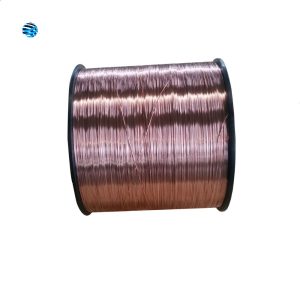
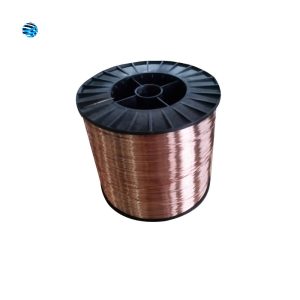
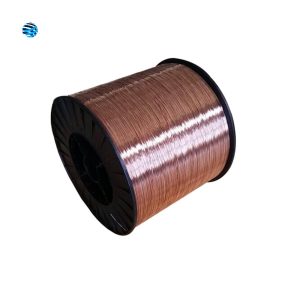


Hard drawn copper is bare copper wire that has not been heated after it has been drawn through a die. The more times the wire is passed through the die, the more “work hardened” it becomes. After a certain point, the wire becomes brittle and may break from stress.
By forgoing heat treatment, hard-drawn copper has much higher tensile strength than annealed copper. Due to its “hardness” it also has a high resistivity. This is because when the wire is pulled through the mold, the crystal structure of the copper itself is destroyed. As a result, it is harder for electrons to flow through the copper because they are busy being jostled by the irregular crystals.
Hard drawn copper is more difficult to work with because it is inflexible, making it difficult to use in some applications. However, it is less expensive because the production time is shorter. It is an excellent choice for situations where flexibility is not as important, especially in overhead wire applications and straight cable bus installations. It is also suitable for industrial, railway and outdoor installation projects.

If the wire is expected to be subjected to high tensile stress, use hard-drawn copper because it can withstand the physical, mechanical, and other stresses associated with that stress. The rigid strength of hard-drawn wire also makes it ideal for straight bus installations and other applications where flexibility is not required.
Annealed copper wire becomes the better choice when flexibility, ductility, and conductivity are required, such as in most commercial, retail, and residential applications. This is because there are many turns and tight areas where rigid, hard brass will be more difficult to maneuver and use.


Shandong Ruitong New Materials Co., Ltd. is a leading supplier of steel and other metal products in China. As an ISO9001:2015 certified company, our products comply with ASTM, AISI, BS, DIN, JIS and other standards.